A Professional's Take on the New Panasonic HC-X1200
The landscape of professional videography is shifting. While large-format cinema cameras and full-frame mirrorless hybrids have dominated the conversation for the last several years, there remains a significant, critical need for the traditional camcorder. Broadcast journalists, event videographers, and documentary filmmakers often find themselves in situations where the ergonomics of a DSLR just cannot keep up with the pace of live action. Panasonic has long been a stalwart in this arena, providing the tools that bridge the gap between high-end cinema production and the nimble requirements of electronic news gathering (ENG). The introduction of the Panasonic HC-X1200 represents a refined step in this lineage, aiming to provide a compact, high-performance solution for professionals who need 4K 60p capabilities in a handheld form factor.
A professional’s perspective on a camera like the HC-X1200 isn't just about megapixels or frame rates; it is about reliability, heat management, and the efficiency of the workflow. When you are covering a three-hour seminar or a fast-moving political rally, you aren't worried about achieving the shallowest possible depth of field. You are worried about your autofocus tracking a moving subject, your battery lasting through the final interview, and your audio being captured cleanly through XLR inputs without the need for external recorders. In this deep dive, we examine how the HC-X1200 handles these real-world demands and where it fits into the modern professional’s kit.
Design and Ergonomics: Built for the Field
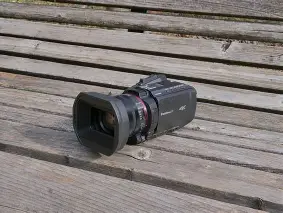
At first glance, the HC-X1200 maintains the classic Panasonic professional aesthetic. It feels substantial without being overly heavy, balancing well in the hand even when a large battery and a top-mounted shotgun microphone are attached. The placement of physical buttons is one of its strongest suits. In professional environments, menu-diving is the enemy of the shot. Panasonic has included dedicated switches for gain, white balance, and shutter speed, along with user-assignable buttons that allow a shooter to customize the interface to their specific muscle memory.
The lens design is particularly noteworthy for those who operate in unpredictable lighting. The HC-X1200 features a Leica Dicomar lens with a triple manual ring system. Having independent control over focus, zoom, and iris via physical rings on the lens barrel is a feature often missed in the transition to mirrorless systems. The zoom range is expansive, covering everything from a wide 25mm to a 600mm equivalent. For event videographers stationed at the back of a large ballroom, that 24x optical zoom is the difference between a usable tight shot and a pixelated cropping nightmare. Furthermore, the i.Zoom feature extends this range to 32x in 4K or 48x in Full HD without significant loss in image quality, which is a lifesaver for sports and wildlife applications.
Heat management, often the Achilles' heel of compact 4K cameras, is addressed here with an internal fan system. This is a crucial distinction for professionals. While many mirrorless cameras will overheat and shut down during long-form recording, the HC-X1200 is designed to run indefinitely. This makes it a primary choice for live streaming and long-form recording of speeches, graduations, and theatrical performances.
Imaging Performance: 4K 10-Bit Internal
Under the hood, the HC-X1200 utilizes a 1/2.5-inch MOS sensor. To the cinematography purist, a sensor of this size might seem small compared to Super 35 or Full Frame options. However, for the intended user, this sensor size offers several technical advantages. It allows for a much more compact lens with a massive zoom range, and it provides a deeper depth of field, which is essential for keeping subjects in focus during live events where there are no second takes.
The real magic lies in the processing. The camera is capable of recording 4K 60p at 10-bit 4:2:2 internally. For the uninitiated, 10-bit recording provides over a billion colors compared to the 16.7 million found in 8-bit files. For professionals, this means significantly more latitude in post-production. If you find yourself shooting an interview under mixed fluorescent and natural light, the 10-bit files allow for much cleaner color correction and grading without the "banding" or "posterization" that often plagues lower-quality files. The inclusion of the HEVC (High-Efficiency Video Coding) codec ensures that these high-quality files don't immediately overwhelm your SD cards, though high-speed V60 or V90 cards are still recommended for the highest bitrates.
Low-light performance is often the concern with smaller sensors. Panasonic has mitigated this with a high-sensitivity sensor design and efficient noise reduction algorithms. While it won't compete with a dedicated low-light beast like a full-frame mirrorless camera, it holds its own in moderately dim environments. When pushed, the grain is fine and "filmic" rather than the blocky digital noise seen in older camcorder generations.
Autofocus and Stabilization: The Silent Partners
In a professional setting, "good" autofocus is often defined as "invisible." You don't want the camera to hunt or pulse. The HC-X1200 utilizes a high-precision AF system that is impressively snappy. It features face detection and tracking that remains sticky even when subjects turn their heads or momentarily move behind obstacles. For a solo operator who is trying to manage audio levels while following a speaker on stage, the reliability of this AF system cannot be overstated.
Discover deals on Cameras & Photography — updated daily.
Shop Amazon →Stabilization is another area where the HC-X1200 shines. It employs a 5-axis Hybrid O.I.S. (Optical Image Stabilization) system. This combines optical and electronic stabilization to smooth out the micro-jitters of handheld shooting. For journalists walking and talking with the camera, or wedding videographers moving through a crowd, the results are remarkably stable. It isn't a replacement for a three-axis gimbal in all scenarios, but for the majority of "run-and-gun" work, it allows for professional-looking stable shots without the need for extra rigging.
Audio and Connectivity: The Pro Essentials
A camera is only half of the production; the other half is audio. The HC-X1200 features two XLR audio inputs with +48V phantom power. This allow for the connection of professional shotgun and lavalier microphones directly into the camera body. Having physical dials for audio levels on the side of the camera—protected by a transparent plastic door to prevent accidental shifts—is a hallmark of professional design. The internal preamp is quiet, providing clean audio that meets broadcast standards.
In terms of output, the camera offers built-in Wi-Fi and supports various streaming protocols including RTSP, RTMP, and RTMPS. This means you can stream directly from the camera to platforms like YouTube or Facebook without needing a dedicated computer interface. The inclusion of an SDI output (in addition to HDMI) is a major win for studio professionals. SDI is a locking connector that supports long cable runs, making it the standard for multi-camera setups in broadcast environments.
Pros and Cons
- Pro: Compact and lightweight design makes it ideal for travel and long days of handheld shooting.
- Pro: 4K 60p 10-bit internal recording offers incredible image quality and grading flexibility for its class.
- Pro: Triple manual rings (Focus, Zoom, Iris) provide tactile control that mirrorless lenses often lack.
- Pro: Built-in ND filters (1/4, 1/16, 1/64) allow for quick exposure adjustments in changing outdoor light.
- Pro: Direct live streaming capabilities via Wi-Fi cater to the modern demand for instant content delivery.
- Con: The 1/2.5-inch sensor limits the ability to achieve extremely shallow depth of field (the "bokeh" look).
- Con: Low-light performance is respectable but understandably behind larger-sensor counterparts.
- Con: The menu system, while functional, can be dense and takes time for a new user to master.
Comparison: HC-X1200 vs. Competitors
When choosing a professional camcorder, buyers often look at how a model stacks up against the competition in terms of features versus price. Below is a breakdown of how the HC-X1200 compares to a standard mirrorless hybrid and a more expensive cinema camera in a professional workflow context.
| Feature | Panasonic HC-X1200 | Pro Mirrorless Hybrid | Entry-Level Cinema Camera |
|---|---|---|---|
| Sensor Size | 1/2.5-inch MOS | Full Frame or APS-C | Super 35mm |
| Optical Zoom | 24x (Built-in) | Depends on Lens (Rarely above 10x) | Interchangeable (Manual) |
| Audio Inputs | Dual XLR (Built-in) | 3.5mm (XLR requires adapter) | Dual XLR (Built-in) |
| ND Filters | Internal (3-step) | External (Requires screw-on filters) | Internal (Motorized) |
| Continuous Run Time | Unlimited (Fan cooled) | Limited by Heat/Battery | Unlimited (Active cooling) |
| Connectivity | SDI, HDMI, Wi-Fi | HDMI, USB-C | SDI, HDMI, XLR, Timecode |
Buying Guide: Is the HC-X1200 Right for You?
Determining whether to invest in the HC-X1200 depends largely on your specific niche within the video production industry. Unlike a "do-it-all" mirrorless camera, the HC-X1200 is a specialist tool designed for efficiency and reliability. Here are the primary considerations for potential buyers.
Who Should Buy the HC-X1200?
Broadcast and News Journalists: For ENG work, speed is king. The HC-X1200 allows you to pull the camera out of the bag, flip it on, and be recording broadcast-ready 4K in seconds. The built-in ND filters and massive zoom range mean you don't have to carry extra lenses or fidget with filters while a story is unfolding.
Corporate and Event Videographers: If your job entails filming long conferences or multi-hour ceremonies, the reliability of the HC-X1200 is its biggest selling point. You won't face the anxiety of an "overheating" warning in the middle of a CEO’s keynote. The ability to plug in two XLR mics for a backup audio track directly into the camera simplifies the setup significantly.
Live Streamers: With the rise of remote events and high-quality webcasting, having a camera that can stream directly to a platform like YouTube without an intermediate capture card is a massive workflow advantage. The HC-X1200 is essentially a portable broadcast studio.
What to Consider Before Buying
Before pulling the trigger, assess your need for low-light performance and artistic depth of field. If your work involves a lot of "cinematic" wedding highlights where you want the background to be a soft blur, a mirrorless camera with a fast prime lens may serve you better. The HC-X1200 is designed for "deep focus" work where keeping everything from the presenter to the PowerPoint slide in focus is the priority.
Discover deals on Cameras & Photography — updated daily.
Browse Now →Also, consider your existing infrastructure. Does your workflow benefit from SDI? Do you already have a stock of high-speed SD cards? While the HC-X1200 is competitively priced, a professional transition always involves more than just the camera body. You will likely want to budget for a high-quality shotgun microphone to take advantage of those XLR ports and large-capacity V-mount or proprietary batteries for all-day shoots.
Real-World Use Case: The Solo Documentary Filmmaker
Consider the scenario of a documentary filmmaker traveling to a remote location to interview a subject. Space is limited, and there is no crew. In this instance, the HC-X1200 becomes the ultimate companion. The filmmaker can set the camera on a tripod, use the AF face tracking to ensure the subject stays in focus even if they lean in or out, and manage both a lavalier mic (on the subject) and a shotgun mic (for ambient sound) through the dual XLR inputs.
During b-roll acquisition, the 24x zoom allows the filmmaker to capture intimate details from a distance without intruding on the subject’s environment. This level of versatility in a single, self-contained unit is why the "camcorder" form factor remains relevant. It is a tool of empowerment for the solo operator, providing a level of technical sophistication that previously required a much larger equipment footprint.
The HC-X1200 also shines in educational settings. Media departments in schools and universities often prefer these cameras because they teach students the fundamentals of professional operation—using manual rings, managing audio levels, and understanding exposure via ND filters—in a way that is more intuitive than the "nested menu" approach of many consumer hybrids.
Performance and Reliability
Professional cameras are judged by their failures as much as their successes. In our testing and observations of the HC-X1200 in the field, the stability of the firmware and the robustness of the build stand out. The camera doesn't lag when switching between modes, and the playback interface is fast, allowing for quick review of clips on the high-resolution touch screen or through the sharp electronic viewfinder (EVF).
The battery life is another area of professional satisfaction. Using the larger AG-VBR series batteries, you can get several hours of 4K recording time. For a camera of this size to manage 4K 60p at 10-bit while simultaneously powering a fan and providing phantom power to microphones is a testament to Panasonic's engineering efficiency. The dual SD card slots provide peace of mind; you can set them to "Relay Recording," where the camera automatically switches to the second card when the first is full, or "Background Recording," where one card records continuously while the other records only when you hit the start/stop button. This ensures that you never miss a moment of an unscripted event.
Conclusion
The Panasonic HC-X1200 is a calculated and successful response to the needs of the modern video professional. It doesn't try to be a cinema camera, nor does it attempt to be a pocket-sized vlogging tool. Instead, it leans into the strengths of the professional camcorder: ergonomics, reliability, integrated features, and ease of use. For the professional who needs to deliver high-quality 4K 60p content under pressure, the HC-X1200 offers a compelling package. It simplifies the technical hurdles of video production, allowing the creator to focus on what truly matters—the story and the subject. While it may not provide the "bokeh" of its larger-sensor cousins, its utility in the world of news, events, and live production makes it an essential tool for those who make their living behind the lens.