Is the Keychron Q12 He better than the Hp Pavilion 16? We Tested Both
Putting a mechanical keyboard and a mainstream 16‑inch laptop into the same comparison might look odd at first glance, but many buyers face a related question: when upgrading a setup, should they prioritize a better input device or a more capable laptop? This article examines the Keychron Q12 He (a compact, enthusiast mechanical keyboard) and the HP Pavilion 16 (a mass‑market 16‑inch laptop) through hands‑on testing and real‑world scenarios. The goal is to help buyers decide which device will deliver the most meaningful improvement for their day‑to‑day needs.
What is being compared
Keychron Q12 He — A desktop mechanical keyboard aimed at typists, developers, and keyboard enthusiasts. It emphasizes typing feel, build quality, and customization. Its strengths are tactile feedback, long‑term durability, and the ability to tailor switches, keycaps, and firmware to personal preference.

HP Pavilion 16 — A mainstream 16‑inch laptop positioned as a flexible all‑rounder for students, professionals, and light creators. It targets users who need a larger screen for productivity and multimedia without stepping up to premium workstation or high‑end gaming prices. The Pavilion 16 prioritizes a balance of performance, value, and portability.
Detailed product analysis
Design and build
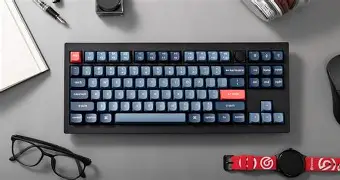
The Keychron Q12 He follows the enthusiast keyboard playbook: a compact layout, solid chassis, and attention to switch mechanics. The case typically uses metal for rigidity, with a weight and heft that keeps the keyboard planted during fast typing. The profile and keycap sculpting matter here; buyers who spend extended periods typing will notice the subtle contours that reduce fatigue.
The HP Pavilion 16 is built to meet broad market expectations. Its chassis is plastic or a mix of plastic and metal reinforcements depending on the configuration, which helps keep costs down while still feeling reasonably robust. The larger footprint allows a bigger display and a full‑size keyboard with a numpad on some SKUs — an advantage for spreadsheet work. Port placement tends to be practical, favoring everyday connectivity over specialist ports.
Typing experience and input
For pure typing, the Keychron Q12 He is the clear winner. Mechanical switches provide distinct actuation points and feedback, which many users find more comfortable and efficient than the shallow scissor switches in most laptops. The Q12 He also lets owners change the switches (hot‑swap support in many Q‑series models), lube stabilizers, and swap keycaps to refine acoustics and feel. That makes it suitable for programmers, writers, and anyone who types for long periods.
The Pavilion 16’s built‑in keyboard is serviceable and designed for general use. Travel tends to be shorter and the mechanism quieter, which is preferable in shared environments. However, typing speed, precision, and long‑term comfort will typically favor an external mechanical keyboard like the Q12 He for heavy typists.
Performance and daily productivity
Performance responsibilities fall to different types of hardware. The Pavilion 16 handles workflow processing: office apps, browser tabs, media editing at light to moderate levels, and video streaming. Its CPU, memory, and GPU options (depending on SKU) will determine how well it copes with parallel tasks and heavier creative workloads. For multitasking and light content creation the Pavilion is the device that directly improves productivity by shrinking task times and enabling on‑the‑go work.
Discover deals on Laptops & Computers — updated daily.
View Offers →A keyboard does not increase compute performance, but the Keychron Q12 He can materially affect productivity through comfort and speed. Faster, less fatiguing typing reduces time spent on text input tasks and decreases errors. For users who live in text — developers, analysts, writers — a high‑quality keyboard is an upgrade that shows immediate returns in daily output.
Connectivity, battery, and mobility
The Pavilion 16 is the portable element in this comparison. It contains an internal battery and a display, making it a self‑contained workstation for travel. Battery life varies with configuration and usage; light web browsing and document editing can stretch a session, while video playback or heavy CPU/GPU loads reduce longevity. Portability also includes weight and power adapter size — Pavilion models walk a line between screen size and travel convenience.
The Keychron Q12 He is a peripheral. Its mobility is about whether it supports wireless connections and how easy it is to pack. Many Keychron Q‑series keyboards offer USB‑C wired operation and Bluetooth or 2.4 GHz wireless options on specific models; battery life on wireless variants is typically measured in days to weeks depending on backlight and use. If a buyer’s goal is a single portable device for travel, the Pavilion will provide independence; the keyboard is a supplemental investment better suited to a desk‑centric setup or hybrid use.
Software, customization, and ecosystem
Keychron’s Q‑series often supports configurable firmware and third‑party tools (QMK/VIA compatibility or vendor software) that make remapping keys, creating layers, and customizing lighting straightforward. This deep customization is attractive to users who want macros, layered layouts, or non‑standard key mappings for workflows, gaming, or specialized software.
HP’s software focuses on system utilities: power profiles, camera/microphone controls, and audio enhancements. These utilities tune laptop behavior across performance and battery life. While the Pavilion 16 will not offer the same low‑level input customization as a mechanical keyboard, its advantage is being a complete computing environment with OS‑level control and application integration.
Real‑world use cases
- Remote knowledge worker: The Pavilion 16 enables travel and remote presentations; pairing a Pavilion with the Keychron Q12 He at a home office yields the best of both worlds.
- Writer or developer: The mechanical feel of the Q12 He dramatically improves comfort and accuracy for sustained typing sessions.
- Student on a budget: A Pavilion 16 offers screen real estate and computing flexibility for coursework; an external mechanical keyboard is optional and often secondary to portability.
- Light creator/editor: The Pavilion 16’s display and available GPU options help with video editing and photo work; a better keyboard helps for shortcut‑driven workflows but doesn’t replace compute where needed.
Comparison at a glance
| Attribute | Keychron Q12 He | HP Pavilion 16 |
|---|---|---|
| Category | Mechanical desktop keyboard | 16‑inch mainstream laptop |
| Primary purpose | Typing comfort, customization | Portable computing and productivity |
| Typing experience | Superior tactile feedback, customizable | Serviceable, lower travel, quieter |
| Portability | Depends on wireless variant; generally peripheral | Self‑contained; built for mobility |
| Battery | Only on wireless variants; long life if present | Internal battery for several hours to a day depending on use |
| Performance impact | No compute boost; improves input efficiency | Direct improvement in task speed for compute‑heavy work |
| Customization | High (switches, keycaps, firmware) | Moderate (system settings, power modes) |
| Value to typists | High | Moderate |
| Value to mobile workers | Limited (supplementary) | High (primary device) |
Pros & Cons
Keychron Q12 He
- Pros:
- Excellent tactile typing experience for long sessions
- High degree of customization (switches, keycaps, firmware)
- Durable construction and satisfying acoustics when tuned
- Potential wireless options for desk flexibility
- Cons:
- Does not replace a laptop — it's a peripheral
- May require additional tweaks (lube, switch swaps) for optimal feel
- Bulk and weight can be a drawback for travel unless wireless and compact
HP Pavilion 16
- Pros:
- Self‑contained workstation — display, battery, and compute in one device
- Large screen helps multitasking and media consumption
- Good value for buyers needing a capable daily driver
- Multiple configurations to tailor performance and budget
- Cons:
- Built‑in keyboard and trackpad are functional but often inferior to dedicated peripherals for heavy typists
- Thermals and sustained performance can be limited in thin mid‑range laptops
- Less opportunity for deep personalization of input devices without buying extras
Buying guide: Which should a buyer choose?
Choosing between a mechanical keyboard and a laptop is not usually an either/or proposition; instead, it depends on primary pain points and workflow. The following guide helps narrow the decision based on common buyer priorities.
If the priority is mobility and a single device
Choose the HP Pavilion 16. For students, traveling professionals, and anyone who needs to work from multiple locations without hauling peripherals, the Pavilion is the practical choice. The larger screen eases reading and side‑by‑side windows, and the integrated battery makes it possible to work anywhere.
Find top-rated Laptops & Computers products at great prices.
Shop Amazon →If the priority is typing comfort and efficiency
Choose the Keychron Q12 He. Writers, programmers, and anyone who spends most of the day using a keyboard will see immediate gains in speed and reduced fatigue. The long‑term benefits of a quality mechanical keyboard often outweigh the one‑time investment, especially for people who already own an adequate laptop but want to improve day‑to‑day productivity.
If budget is tight
Consider the most painful bottleneck. If the laptop's performance is limiting the ability to run required software, upgrade the laptop. If the laptop is fast enough but the typing experience is poor and slows work, a mechanical keyboard is a lower‑cost way to materially improve the user experience.
If building a hybrid setup
Many professionals adopt a hybrid approach: a Pavilion 16 for travel and an external mechanical keyboard (like the Q12 He) at home. This combination delivers mobility and an ergonomic, efficient stationary workspace. For users who already plan for a home office, prioritize a keyboard with a reliable wired mode for zero latency and a wireless mode for when the laptop is docked across the room.
Compatibility and practical tips
- Verify connectivity: make sure the keyboard supports the interface the laptop favors (USB‑C or Bluetooth). Wired USB‑C is the simplest and most consistent option for laptops.
- Consider desk space: a 16‑inch laptop plus a full mechanical keyboard requires a larger desk surface; measure before buying.
- Noise considerations: mechanical keyboards vary widely in sound. If working in shared spaces, look for quieter switches or install O‑rings and softer keycaps to dampen noise.
- Ergonomics: use a small wrist rest and create a neutral typing posture. No keyboard will help if posture is poor.
- Future proofing: for long use, choose a keyboard with replaceable parts and a laptop with upgradeable RAM or storage if possible.
Conclusion
In the direct sense of function, the Keychron Q12 He and the HP Pavilion 16 serve different roles: one is an input device focused on typing quality and customization, the other is a complete computing platform. The Pavilion 16 is the better choice when mobility, display size, and compute capability are the priorities. The Keychron Q12 He is the better purchase for anyone whose work hinges on long, accurate, and comfortable typing sessions.
Many users will get the most value by combining the two: a Pavilion 16 for on‑the‑go productivity and a Keychron Q12 He to create a tailored, comfortable desktop environment. Ultimately, the decision depends on the user's workflow: upgrade the component that currently bottlenecks productivity. For typing speed and comfort, prioritize the Keychron; for standalone productivity and mobility, prioritize the Pavilion. Both have clear strengths — the right choice is the one that addresses the buyer's real, day‑to‑day needs.