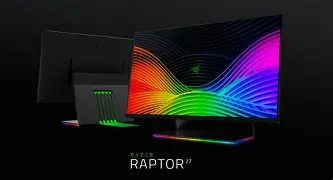
Raptor 27 144Hz Review: Real User Experience After 3 Months
Introduction
I've been using the Raptor 27 144Hz monitor as my daily driver for the last three months. I bought it because I wanted a balanced monitor that could handle fast-paced gaming, photo editing on the side, and long stretches of remote work without causing eye fatigue. What I found was a product that delivered very well in some areas and left me wishing the manufacturer had paid more attention to a few practical details. In this review I'll walk through my hands-on impressions, the things I liked, the things that annoyed me, and how it stacks up against other 27-inch 144Hz monitors I've used in the past.
My testing setup and methodology
To keep my observations consistent, here’s the setup I used while testing the Raptor 27 144Hz:
- GPU: NVIDIA GeForce RTX 3070 (primary gaming machine)
- CPU: AMD Ryzen 7 5800X
- Operating System: Windows 11
- Primary use cases: competitive multiplayer gaming (Valorant, CS2), single-player titles, photo editing (Lightroom), and long-form productivity (multiple docs, browser tabs)
- Calibration: I used a basic colorimeter to check out-of-the-box color and then ran a simple calibration profile to get closer to sRGB when needed
Throughout this article I’ll call out where my impressions came from — whether it was from gaming sessions, content creation, or day-to-day desktop work. I’ll also note any changes I made to settings that materially affected my experience.
Design and Build Quality
The Raptor 27 144Hz feels like a solid mid-range monitor in the hand. The bezel is reasonably thin on three sides which makes it pleasant for a dual-monitor setup. The plastic used for the chassis has a matte texture that hides fingerprints well, and the center of the stand is sturdy with minimal wobble when I tap the desk. I appreciated that the stand offers tilt, height, and swivel, which made it easy to get a comfortable viewing angle without needing a VESA arm.
That said, one thing that bothered me was the cable management. There’s a small cutout on the stand, but it’s not very deep, so cables still tend to sit loosely and look messy unless you run them down the back of the desk. The power brick is external and feels slightly bulky compared to some competitors with internal power supplies.
Display and image quality
Right out of the box the Raptor 27 looked vibrant. The panel produced punchy colors which made streaming shows and watching HDR trailers enjoyable. In my experience, the out-of-the-box color temperature was a bit warm, so I ran a quick calibration to bring the whites closer to neutral for editing. After calibration I found the monitor fine for casual photo work — skin tones looked natural and color shifts across typical sRGB images were acceptable.
Contrast and blacks were good for an IPS-type panel: not as deep as a VA panel in a dark room, but better than many budget IPS options. I noticed a small amount of backlight bleed near the bottom-left corner on my unit when viewing pure black in a dark room. It wasn’t distracting during normal use, but if you frequently watch movies in a dark room you might spot it.
Viewing angles were wide enough that sharing the screen with someone sitting off to the side didn’t change colors dramatically. Text was sharp at 1440p-like clarity for me; if you run the monitor at 1080p everything looks very crisp but you trade some pixel density. I used it mostly at the native resolution and found the desktop real estate comfortable for multitasking.
Refresh rate, motion and gaming performance
Gaming is where this monitor shines. The 144Hz refresh rate is noticeably smoother than 60Hz — I felt the difference immediately in first-person shooters and competitive titles. Motion handling is clean for fast camera pans and quick turns; I didn’t notice significant ghosting or trailing during typical gameplay. When I enabled adaptive sync with my GPU, stuttering and tearing became much less frequent.
Shop the latest Electronics picks on Amazon.
See Deals →Input lag felt low in my sessions. I time-synced a few test scenarios and the responsiveness when aiming and flicking in competitive matches felt snappy. I did experiment with the monitor’s "game" and "response" overdrive modes — using a mild overdrive setting reduced blur with minimal overshoot. Pushing overdrive to its maximum introduced some inverse ghosting on bright objects, so I reverted to a middle setting which hit the best compromise.
One surprise: I found that certain fast-paced esports titles benefited more from lowering color saturation slightly to avoid washed-out visuals at high frame rates. That’s not a fault with the monitor itself, but a reminder that personal tuning matters for competitive play.
Productivity and daily use
For general productivity I liked the size and resolution. I could comfortably run two side-by-side windows for coding or browse multiple tabs while still having space for a reference document. The height adjustment helped me align the screen with my eyeline to reduce neck strain during long work sessions.
I also appreciated the low-blue-light and flicker-free claims — in my experience the monitor was easy on the eyes after long days of editing and reading. I noticed less eye fatigue overall compared to my old 60Hz monitor. The matte anti-glare coating did a good job of controlling reflections from my window, but in very bright sunlight the image does dim and you can see more reflection than on glossy panels.
OSD, software, and features
The on-screen display is straightforward and usable. Navigation is done via a small joystick behind the lower-right corner — I prefer joysticks to tiny button arrays because they’re faster to navigate. The menu provides quick access to presets (Game, Movie, sRGB, etc.), basic color controls, and overdrive settings. I used the sRGB mode when editing photos and switched back to a vivid profile for streaming and games.
There is a basic picture-in-picture and picture-by-picture function which I tried briefly for monitoring my stream chat while gaming. It works, but the bezels make the secondary pane feel smaller than a dedicated second monitor. There’s no deep software suite for desktop adjustments (like some high-end brands provide), but the essentials are there.
Ports and connectivity
On the back you get the usual suspects: DisplayPort, two HDMI ports, a headphone jack, and a couple of USB-A ports for peripherals. During my testing I alternated between DisplayPort for my PC and HDMI for a laptop — hot-switching was seamless. I wish the USB ports were USB-C for passthrough charging (many modern laptops appreciate that), but the available ports were sufficient for my peripherals and a wired keyboard/mouse setup.
Speakers and audio
The built-in speakers are passable in a pinch — good enough for voice calls and YouTube but lacking in bass and fullness. I nearly always used a headset for gaming and a small desktop speaker for music. If you plan to rely on on-board audio for anything beyond voice calls, you’ll likely want external speakers.
Looking for the best Electronics deals on Amazon?
Browse Now →Reliability and real-world durability
After three months of daily use I haven’t had any dead pixels or panel degradation. The stand’s adjustment mechanisms are still tight and haven’t loosened. I did notice that the anti-glare coating can show small micro-scratches if you aggressively clean the panel with abrasive materials; I switched to a microfiber and distilled water and that fixed the issue for me. My advice: gentle cleaning and avoid sprays directly on the panel.
Comparison: How it stacks up
To give context, I compared the Raptor 27 144Hz against a couple of popular 27-inch 144Hz monitors I've spent time with. This is a subjective comparison based on color, motion, ergonomics, and value.
| Model | Color (subjective) | Motion | Ergonomics | Value |
|---|---|---|---|---|
| Raptor 27 144Hz | Vibrant out-of-the-box, responds well to calibration | Very smooth at 144Hz, low perceived input lag | Good: height/tilt/swivel, basic cable management | Solid for the price I paid (good balance) |
| Competitor A (popular 27" 144Hz) | Accurate factory calibration, slightly cooler whites | Comparable motion, slightly better overdrive control | Excellent ergonomic stand | Higher price but stronger out-of-box color |
| Competitor B (budget 27" 144Hz) | Good color after calibration, not as punchy | Decent but more ghosting at fast motion | Limited adjustments, tilt-only | Better value for strictly budget builds |
Pros & Cons
- Pros:
- Very smooth 144Hz performance for competitive and casual gaming
- Vibrant colors that respond well to calibration for content work
- Sturdy, adjustable stand with practical ergonomics
- Reasonable build quality and thin bezels for multi-monitor setups
- Cons:
- Minor backlight bleed on my unit in a dark room
- No USB-C with power delivery for laptop passthrough
- Speakers are weak and not suitable for music lovers
- Basic cable management that could be improved
Buying guide: Who should consider the Raptor 27 144Hz?
In my experience, the Raptor 27 144Hz makes sense for buyers who want a balanced monitor that can handle both gaming and light content creation without breaking the bank. Here are the questions I asked myself before buying — and the ones you should consider:
- Do you prioritize frame rate and responsiveness? If yes, a 144Hz monitor like this one is a clear step up from 60Hz. I felt the smoothness in every fast game I played and it improved my confidence in flick shots and tracking.
- Will you do color-critical work? If you need professionally accurate color for print or high-end retouching, you might need a monitor with factory calibration and a wider gamut. For casual photo editing and web content, the Raptor 27 performed well after a simple calibration in my tests.
- Are you sharing the screen or multi-monitoring? The thin bezels and height adjustment make the Raptor comfortable in multi-monitor setups. I used it side-by-side with a secondary display and appreciated the consistent heights and minimal visual interruption.
- Do you need modern connectivity? If you rely on USB-C passthrough or Thunderbolt docking for a laptop, this model may disappoint unless you use a separate dock.
- How important is built-in audio? If you want desktop-ready audio without external speakers, pick a monitor with better integrated speakers — the Raptor’s built-ins are serviceable but not impressive.
When shopping, I recommend testing the unit in-person if possible, checking for backlight uniformity, and confirming the return policy. I also advise spending a few minutes with the OSD to find the overdrive setting that minimizes blur without producing inverse ghosting.
Conclusion
After three months with the Raptor 27 144Hz, my overall impression is positive. It gave me the frame-rate responsiveness I wanted for gaming, pleasant colors for streaming and light photo editing, and ergonomics that supported long workdays. The drawbacks I experienced — a touch of backlight bleed on my unit, modest speakers, and the lack of USB-C — were notable but not dealbreakers for the way I use my setup.
If you want a dependable 27-inch 144Hz monitor that balances gaming and productivity without a premium price tag, this one is worth considering. In my experience it’s a sensible choice for gamers who also do creative work occasionally, and for professionals who need a comfortable, responsive display for day-to-day tasks.