Sigma 12Mm F1.4 DC DN Contemporary vs Sigma 135Mm F1.8 DG HSM Art: Which Should You Buy?
After nearly a decade of carrying around heavy camera bags and swapping lenses in the middle of crowded streets, I’ve learned that the choice between two lenses is rarely about which one is "better" in a vacuum. Instead, it’s about which one fits the stories you are trying to tell. Over the last six months, I have had the unique opportunity to own and extensively use two of Sigma’s most distinctive primes: the Sigma 12mm f/1.4 DC DN Contemporary and the Sigma 135mm f/1.8 DG HSM Art. While on paper these lenses couldn't be more different—one is an ultra-wide for crop sensors and the other is a telephoto powerhouse for full-frame systems—I found myself reaching for them in surprisingly similar high-stakes scenarios. Whether I was shooting low-light events, architecture, or creative portraits, these two lenses defined my photographic output for the better part of a year.
In this article, I want to share my personal journey with these two pieces of glass. I bought them with my own money, traveled with them across three different climate zones, and pushed their wide-aperture capabilities to the absolute limit. I’ll be honest about where they excelled and where they left me frustrated, helping you decide which of these specialist tools deserves a spot in your kit.
The Wide-Angle Wonder: My Time with the Sigma 12mm f/1.4 DC DN Contemporary
When I first unboxed the 12mm f/1.4 Contemporary, I was primarily looking for a lens that could solve my indoor architectural woes. I shoot on a Sony APS-C body frequently when I want to travel light, and finding a truly wide prime that doesn't distort like a fisheye but maintains a fast aperture is harder than it looks. The 12mm focal length gives me an 18mm equivalent field of view, which is that "sweet spot" for immersive landscapes and tight interior shots.
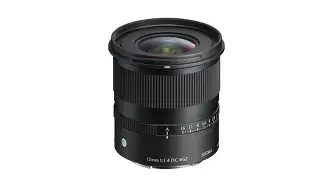
My first impression of the build was that it felt surprisingly "Art-like" for a lens with a "Contemporary" badge. It has a dust- and splash-resistant structure, which I put to the test during a drizzly afternoon in the Pacific Northwest. I was surprised by how much I appreciated the manual focus ring; it’s smooth but has enough resistance that I didn't accidentally bump it out of focus while navigating through brush. However, one thing that bothered me initially was the size. For a crop-sensor lens, it’s a bit of a chunk. It isn't heavy compared to full-frame glass, but it definitely makes a compact mirrorless body feel front-heavy.
In the field, the f/1.4 aperture is a game-changer. I’ve been using this lens for astrophotography on several moonless nights, and what I found was that it gathers light like a sponge. I was able to keep my ISO lower than I ever could with my previous f/2.8 zooms. I noticed that the coma—the way stars at the edge of the frame can look like little seagulls—is remarkably well-controlled. It isn't perfect, but for a lens at this price point, I was genuinely impressed. I did find a bit of purple fringing when shooting high-contrast tree branches against a white sky, but it was nothing a quick slider move in post-production couldn't fix.
The Bokeh King: Five Months with the Sigma 135mm f/1.8 DG HSM Art
Moving from the 12mm to the 135mm f/1.8 Art is like moving from a nimble sports car to a heavy-duty luxury tank. This lens is part of Sigma’s prestigious Art line, and it earns that title every time you press the shutter. I bought this lens because I was chasing a specific "look"—that ultra-compressed background where the subject seems to pop off the screen with a 3D effect. I used this primarily on my full-frame body for outdoor portraits and lifestyle sessions.
The first thing I’ll say about the 135mm is that you need to be prepared for the physical toll. It is heavy. After a three-hour wedding shoot, my wrist was definitely feeling the weight of that massive front glass element. But the trade-off is the image quality. In my experience, this is one of the sharpest lenses ever made. Even wide open at f/1.8, the detail in the eyelashes of my subjects was staggering. I’ve used many 85mm primes over the years, but I found that the 135mm offers a level of subject isolation that an 85mm simply cannot match. The compression of the background turns a cluttered park into a wash of watercolor greens and browns.
Discover deals on Cameras & Photography — updated daily.
View Offers →One disappointment a real owner would notice is the autofocus speed in low light. While the Hyper Sonic Motor (HSM) is generally fast and silent, I noticed that it can "hunt" slightly when the sun goes down, especially if you are trying to focus on a subject that isn't moving toward you. It’s worth noting that the minimum focus distance is about 87cm. While that sounds close, for a 135mm lens, it means you can't really do "macro-style" detail shots of rings or flowers without backing up significantly. I found myself doing a literal "backwards dance" more than once during tight ceremonies.
Head-to-Head Comparison: Technical and Practical Differences
While these lenses serve opposite ends of the focal length spectrum, comparing their performance characteristics reveals a lot about Sigma’s design philosophy across their different lines. The 12mm is about versatility and mobility for crop users, while the 135mm is about uncompromising optical perfection for full-frame professionals.
I put together this table to highlight the "on-the-ground" specs that actually mattered to me during my months of testing:
| Feature | Sigma 12mm f/1.4 DC DN (C) | Sigma 135mm f/1.8 DG HSM (A) |
|---|---|---|
| Sensor Format | APS-C / Crop Sensor | Full Frame (Can use on Crop) |
| Equivalent Focal Length | 18mm (on 1.5x Crop) | 202mm (on 1.5x Crop) |
| Weight | Approx. 640g | Approx. 1,130g |
| Filter Size | 67mm | 82mm |
| Main Strength | Astro, Interiors, Vlogging | Portraits, Fashion, Sports |
| Biggest Weakness | Slight Barrel Distortion | Significant Weight/Size |
What I Learned: The Pros and Cons of Each
After half a year of switching between these two, I’ve distilled my experience into a list of what worked for me and what didn't. These aren't based on lab charts, but on actual time spent in the field.
Sigma 12mm f/1.4 DC DN Contemporary
- Pro: Exceptional Low Light Performance. Being able to shoot at f/1.4 at such a wide angle allowed me to capture handheld shots in dimly lit cathedrals that would have been a blurry mess with a slower lens.
- Pro: Weather Sealing. I was surprised by how well the mount gasket kept moisture out during a misty morning hike. It feels much more durable than other "Contemporary" lenses.
- Pro: Video Versatility. The internal focusing means the lens doesn't change length, making it great for use on a gimbal. I used it for several "walk-and-talk" vlog segments and the autofocus was sticky and reliable.
- Con: Size for APS-C. If you bought a crop sensor camera to keep things tiny, this lens might frustrate you. It takes up a significant amount of space in a small bag.
- Con: Edge Softness. While the center is razor-sharp at f/1.4, I noticed that the extreme corners don't really sharpen up until you stop down to f/2.8 or f/4.
Sigma 135mm f/1.8 DG HSM Art
- Pro: Unmatched Sharpness. I’ve never seen a lens render fine texture quite like this. For high-end portraiture, it’s almost too sharp—I often have to soften the skin a bit in post!
- Pro: Breathtaking Bokeh. The 9-blade rounded diaphragm creates perfectly circular light orbs. There is very little "cat-eye" effect toward the edges, which is rare for such a fast telephoto.
- Pro: Construction Quality. This lens feels like it will last thirty years. The brass bayonet mount and the reinforced barrel feel professional in every sense of the word.
- Con: Ergonomics. Carrying this for a full day is a workout. You really need a camera body with a substantial grip (or a battery grip) to balance the weight of the lens.
- Con: No Image Stabilization. Since this lens doesn't have "OS" (Optical Stabilization), you are heavily reliant on your camera's in-body stabilization or a very fast shutter speed. I found that I couldn't safely shoot below 1/200th of a second handheld without getting some micro-blur.
Buying Guide: Which One Fits Your Style?
If you are standing in a camera shop or looking at your cart online, trying to decide between these two, you need to ask yourself what your "limiting factor" currently is. Are you missing shots because you can't fit enough in the frame, or because your portraits lack that professional, creamy separation?
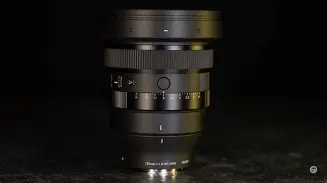
Buy the Sigma 12mm f/1.4 DC DN Contemporary if:
You are an APS-C shooter who loves the night sky, architecture, or street photography. This lens is the definitive choice for anyone who finds the kit lens too dark and the 16mm options not quite wide enough. I found it particularly indispensable for travel; being able to capture the scale of a mountain range and then turn the camera on myself for a vlog without looking like a "distorted mess" is a rare feat. It’s also the better choice if you frequently work in narrow spaces where you literally cannot move any further back.
Buy the Sigma 135mm f/1.8 DG HSM Art if:
You are a portrait or wedding photographer who wants to distinguish your work with a look that cheaper lenses cannot replicate. In my experience, the "135mm look" is a hallmark of high-end photography. If you have a full-frame sensor and you don't mind the weight, this is a "bucket list" lens. It’s also surprisingly useful for indoor sports like volleyball or basketball where you can't use a flash but need that f/1.8 speed to freeze the action. Just make sure your camera has decent internal stabilization, or you have a very steady hand.
Shop the latest Cameras & Photography picks on Amazon.
View Offers →A Note on Using the 135mm on a Crop Sensor
I did try mounting the 135mm Art on my crop sensor body using an adapter, and I want to share a warning: it becomes a 202mm equivalent f/1.8. While that sounds amazing for reach, it is incredibly difficult to use for anything other than specific wildlife or long-distance candid shots. The field of view is so narrow that I found myself having to stand across the street just to get a half-body portrait of a friend. If you only own a crop sensor camera, stay with the 12mm or look at the 56mm f/1.4 instead.
Final Thoughts After Months of Testing
There is a recurring theme in my photography: I want to capture things as my eyes see them, but with a touch of "extra" that makes the viewer stop and look. Both of these Sigma lenses provide that "extra," but in polar opposite ways. The 12mm f/1.4 gives you a grand, sweeping view of the world that stays sharp and bright, while the 135mm f/1.8 allows you to surgically remove a subject from their environment and place them in a sea of blur.
After using them side-by-side, if I had to choose only one to keep for the rest of my career, I’d personally choose the 135mm f/1.8 Art—simply because the images it produces have a "magic" to them that is harder to find elsewhere. However, for my day-to-day work, especially when I’m traveling or shooting video, the 12mm f/1.4 is the lens that actually stays on my camera more often. It’s practical, it’s fast, and it solved more of my technical problems than the 135mm did.
The Sigma 12mm is a tool of utility and expansion, while the Sigma 135mm is a tool of art and isolation. Whichever you choose, you aren't just buying glass; you are buying a new way to see your subjects. I don't regret a single dollar spent on either, but I do recommend investing in a good shoulder strap if you go for the 135mm—your neck will thank me later.
In the end, my experience taught me that Sigma has successfully bridged the gap between their different lines. The "Contemporary" lens is much more "Art" than I expected, and the "Art" lens is even more specialized than I imagined. Take a look at your recent photos; if you see too many "flat" portraits, go for the 135mm. If you see too many "dark" or "cramped" landscapes, the 12mm is your new best friend.